Scent marketing:
how brands use fragrance to be remembered
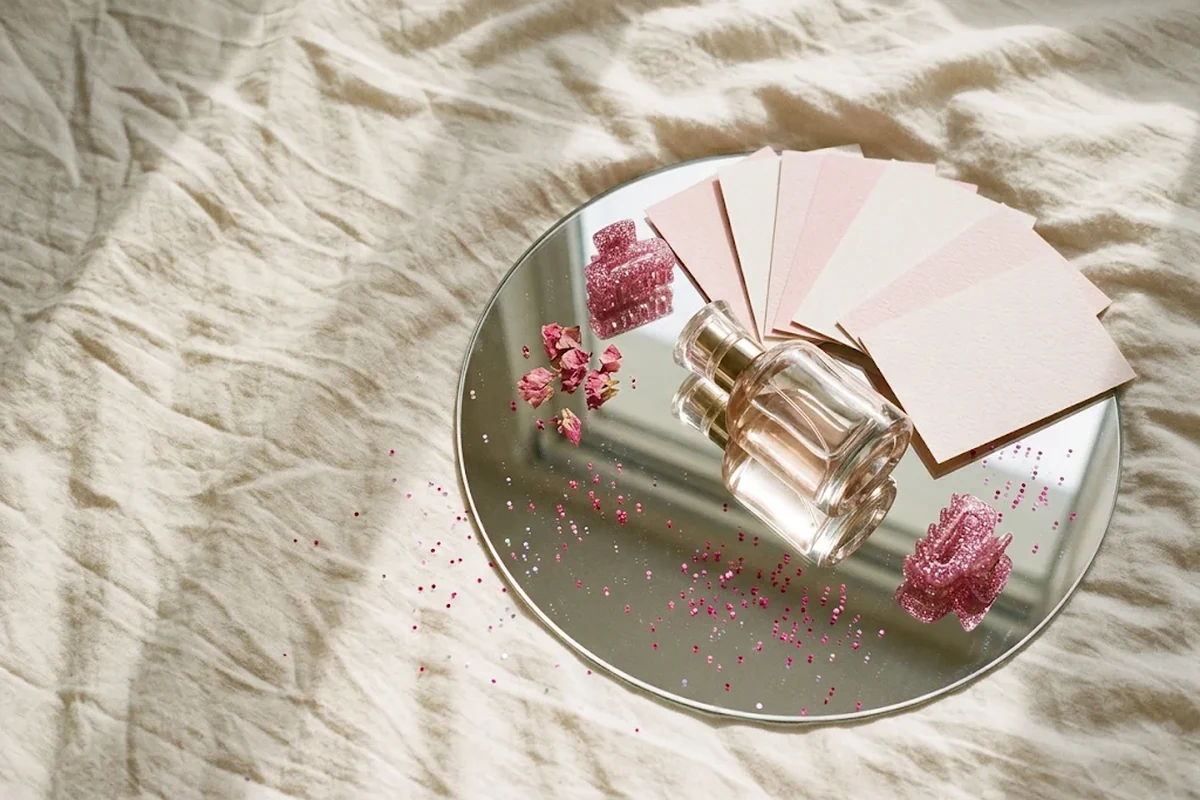
Sound and colour are easy to show on a screen. Smell is not, which is exactly why a brand that gets it right is remembered. Scent marketing is the deliberate use of fragrance to shape how people feel about a brand, in a shop, in a box or in a bottle.
1. What scent marketing means
It covers three different things, and they are easy to mix up. Scent branding is a signature fragrance a brand uses again and again, like a logo you can smell. Ambient scenting is a fragrance diffused in a space such as a shop, a hotel lobby or a spa. Product fragrance is the scent of the product itself, which is the whole point of a perfume and part of the experience in skincare, candles or body care.
A small brand does not need all three. It needs to know which one it is actually using.
2. Why smell sticks
Smell takes a short route in the brain. Research reviews describe the olfactory bulb as projecting directly to the amygdala and, through the piriform cortex, to the hippocampal system, areas linked to emotion and memory. Odours are also described as particularly effective at bringing back emotional memories.
That is why a scent can take you back to a place or a year in a second. For a brand, the opportunity is to be attached to a good memory. The risk is the same mechanism in reverse: a scent that feels heavy or generic will be remembered too.
3. Where a brand can use scent
In a space: a shop, studio or event with one consistent, light fragrance. In the packaging: scented tissue paper, a card or a sachet that people notice when they open the box. In the product: for perfume and beauty the formula is the experience, so the scent has to match the story you tell everywhere else.
In samples: a small vial or a scented card sent with an order is the cheapest way to let someone meet the scent. At events and pop-ups: a scent tied to one moment, like a launch, becomes a memory of that moment.
4. If you only sell online
A screen cannot carry a smell, so you translate it. Use words people can picture, such as warm, powdery, sparkling or salty, and name the place, the light and the time of day. Choose images and sound that feel like the fragrance. Then give people a way to try it, because a sample closes the gap better than any adjective.
I wrote about the sound side in sensory marketing: sound and music, and about the words in how to write a perfume description.
5. Rules to keep it welcome
Keep it light: a strong scent in a small room is a nuisance and can bother people with sensitivities. Keep it consistent, because the point is repetition. Offer an unscented option in shared spaces. Say what is in the product, since fragrance ingredients are regulated: in the EU, cosmetic products must list a longer set of fragrance allergens, more than 80 substances, when they pass set concentrations.
And do not promise that a scent changes mood or health unless you can prove it.
6. Start small, then check
Pick two or three feeling words for the brand, such as soft, nostalgic and bright. Pick one place to use scent, like the parcel or a sample card. Keep it for a few months.
Then look for simple signals: do people mention the scent in reviews, replies or photos? Do repeat customers? For a small brand that is enough to know if it is worth more.
Quick answers
What is scent marketing? The deliberate use of fragrance to shape how people feel about a brand and remember it, in spaces, products, packaging or samples.
Does smell really help memory? Research reviews describe direct connections between the olfactory system and brain areas linked to emotion and memory, and suggest odours can be especially effective at recalling emotional memories. How much that changes buying is harder to prove, so test it on a small scale.
Can an online-only brand use scent? Yes. Use samples, scented inserts in parcels and descriptive writing that helps people imagine the scent.
Is scent marketing only for perfume brands? No. Hotels, spas, shops, candle and skincare brands and studios use it, as long as the scent fits the brand.
The takeaway
Choose one feeling, one place and one scent, and repeat them. Smell does the remembering. Your job is to make it a memory worth keeping. For the words, read perfume descriptions that sell, and for borrowing a mood, Y2K nostalgia in marketing.
Sources: Kadohisa, Effects of odor on emotion (2013) · Soudry et al., Olfactory system and emotion (2011) · European Commission: fragrance allergens labelling
Want a brand people remember with more than one sense?
I plan brand and content for fashion, beauty and lifestyle brands, from the idea to the words and the visuals. In English and Italian, remote-first, occasionally on site in Milan when a project needs it.
Free intro call ♪♪ What do I listen to for focus and fresh ideas?My songs to work and daydream to.▶︎ Play