Perfume descriptions that sell:
how to write about a scent
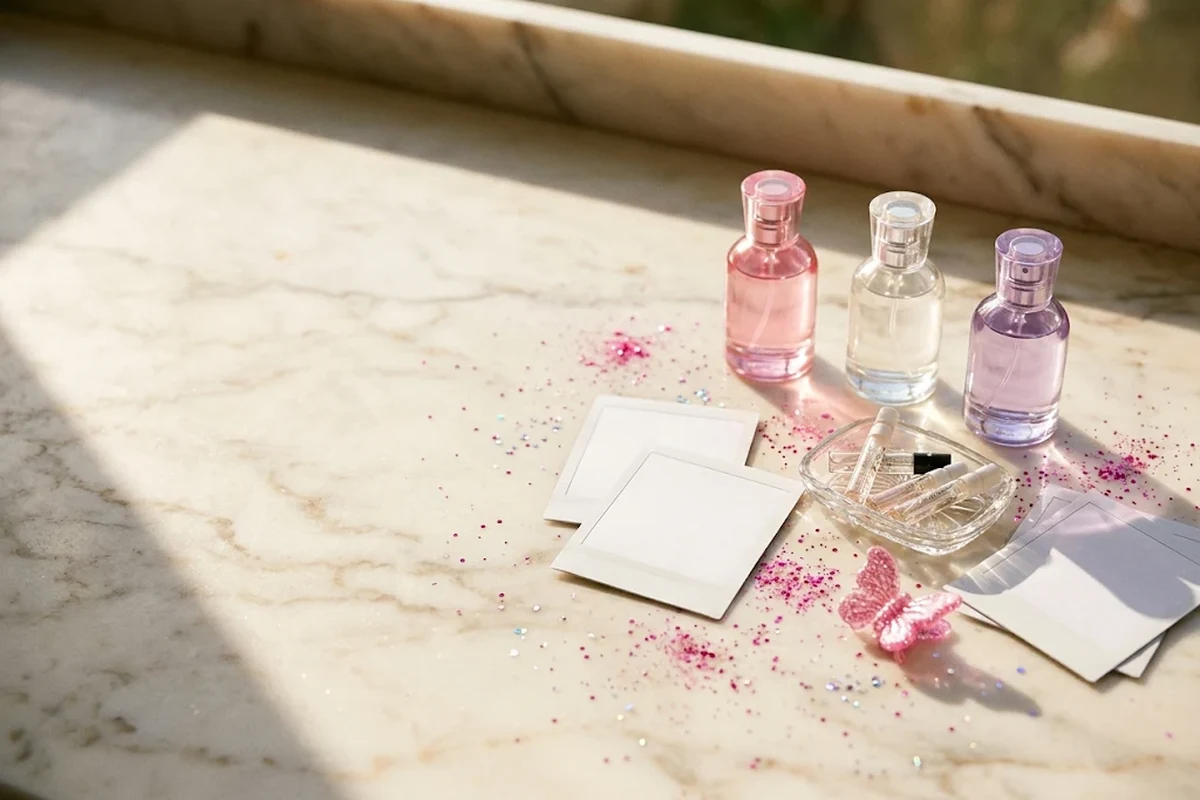
Nobody can smell a screen. A perfume page has to do the job of a nose with words, a few images and a way to try. Most descriptions fail because they list notes and adjectives that fit every bottle.
1. Start with a feeling, then the notes
Most people do not read a list of notes first. They look for a mood. Open with one sentence about how the scent feels or where it takes you, then give the notes.
A fragrance is usually described in three layers: top notes you smell first, heart notes that form the body, and base notes that stay the longest. The pyramid is useful, but it is the second line, not the first.
2. Use words people can picture
“Elegant”, “unique” and “timeless” fit every bottle, so they say nothing. Use words tied to the senses: texture (soft, creamy, powdery), light (bright, hazy, golden), temperature (cool, warm), place and time (a clean towel, a late summer evening). One precise image beats five adjectives.
An invented example. Before: “An elegant, unique fragrance with long-lasting notes.” After: “Clean cotton, a little pink pepper and warm musk. It smells like a freshly ironed shirt on a sunny afternoon: soft, close to the skin, easy to wear every day.”
3. Explain the notes in plain language
Many notes mean little to a first-time buyer. Add a short phrase next to the unfamiliar ones: iris, powdery and cool like cosmetics; musk, clean and skin-like; amber, warm and a little sweet.
Nobody should need a glossary to understand what they are buying.
4. Say how it behaves
Say what it is like on the skin and across the day: fresh or warm, close to the skin or noticeable in a room, for daytime, evenings or all year round. Skip a number of hours unless you have tested it, because a scent behaves differently on different skin and people compare notes.
Write what you know, and say that it varies.
5. Let people try before they commit
A description can only do so much. Sample vials, a discovery set or a clear policy for tested products bring the sale closer. Say plainly how samples work: the price, whether it is credited against a full bottle and how long delivery takes.
6. Be careful with comparisons and claims
Naming another brand’s bestseller to say yours is “like” it can cause trouble with comparative advertising and trademark rules, so check the rules in your market. I am not a lawyer.
Ingredients are regulated too. In the EU, cosmetic products placed on the market from 31 July 2026 must list the expanded set of more than 80 fragrance allergens individually on the label when they pass set thresholds (0.001% in leave-on products such as perfume). Products already on the market have until 31 July 2028. As far as I could find, Great Britain has not adopted the change, so check each market. Ask whoever is responsible for your product’s compliance, and keep the label and the website consistent.
Quick answers
How do you write a perfume description? Open with a feeling, give the three layers of notes in plain words, say how it wears and when, and offer a way to try it.
Should a perfume description list the notes? Yes, but after the mood, and with a short plain explanation for notes most people do not know.
Do perfumes have to list allergens in the EU? Cosmetic products, perfume included, must label fragrance allergens above set thresholds. The list grew to more than 80 substances: new products placed on the EU market from 31 July 2026 must comply, and products already on the market have until 31 July 2028.
How long should a perfume description be? Short enough to read on a phone: a line about the feeling, two or three lines on notes and wear, and a link to samples.
The takeaway
Lead with a feeling, use words people can picture, explain the notes simply and give people a way to try. For the bigger picture, see scent marketing, and for structuring the shop pages, SEO for fashion and beauty e-commerce.
Sources: European Commission: fragrance allergens labelling · HPRA: labelling of cosmetic fragrance allergens · SGS: thresholds and timeline · Beauty Matter: Great Britain not yet included
Need product pages that sound like your brand?
I write and structure product and category pages for fashion and beauty brands, with SEO built in. In English and Italian, remote-first, occasionally on site in Milan when a project needs it.
Free intro call ♪♪ What do I listen to for focus and fresh ideas?My songs to work and daydream to.▶︎ Play